

About Course
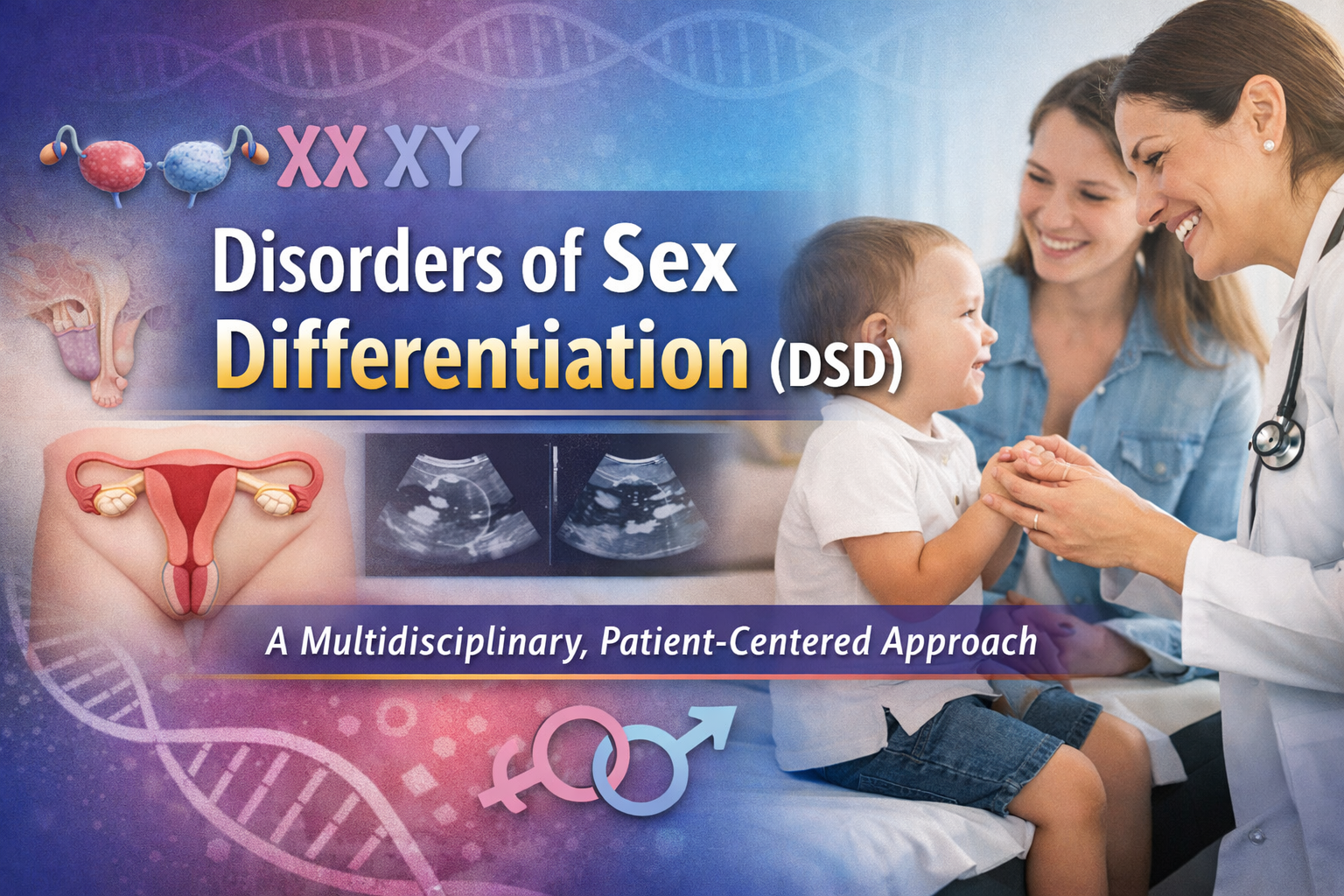
Disorders of Sex Differentiation (DSD) represent a complex group of congenital conditions in which the development of chromosomal, gonadal, or anatomic sex is atypical. These conditions sit at the intersection of pediatric urology, endocrinology, genetics, psychology, ethics, and human rights, and require thoughtful, coordinated, and compassionate care. This course provides a comprehensive, evidence-based, and clinically grounded framework for understanding, diagnosing, and managing DSD across the lifespan.
The course begins with a thorough review of normal sex development, emphasizing the genetic, hormonal, and embryologic mechanisms that underpin gonadal and genital differentiation. Participants will then explore contemporary classification systems for DSD, their clinical utility, and their limitations in capturing phenotypic and genotypic diversity. Particular attention is paid to the evolution of terminology and the importance of language that is scientifically accurate, culturally sensitive, and respectful of patients and families.
A significant portion of the course focuses on the initial evaluation of the newborn or child with suspected DSD. Learners will be guided through the practical and often urgent considerations encountered in the delivery room and neonatal period, including identification of life-threatening conditions such as salt-wasting congenital adrenal hyperplasia. Emphasis is placed on careful physical examination, appropriate use of laboratory and imaging studies, and avoidance of premature sex assignment. Strategies for communicating diagnostic uncertainty to families in a clear, compassionate, and supportive manner are integrated throughout.
The course provides an in-depth review of specific DSD conditions, including 46,XX DSD, 46,XY DSD, and sex chromosome DSD. For each category, the underlying pathophysiology, clinical presentation, diagnostic approach, and management options are discussed, with attention to genotype–phenotype correlations and areas of ongoing uncertainty. Advances in molecular genetics and their implications for diagnosis, counseling, and prognosis are highlighted.
Sex assignment and decision-making are addressed as a distinct and critically important component of care. Learners will examine the principles that guide sex assignment, including potential for fertility, endocrine function, genital anatomy, anticipated pubertal development, and long-term psychosocial outcomes. The course emphasizes shared decision-making with families, respect for patient autonomy, and the ethical imperative to avoid irreversible interventions when clear medical benefit is lacking.
Surgical and hormonal management strategies are presented in a balanced and outcomes-focused manner. The course reviews the historical evolution of surgical approaches in DSD, lessons learned from long-term follow-up studies, and current indications for intervention. Participants will gain a clear understanding of the goals, timing, and potential complications of feminizing and masculinizing genitoplasty, as well as the complex considerations surrounding gonadectomy. Hormonal management, including adrenal replacement therapy, pubertal induction, and lifelong endocrine care, is discussed in detail.
Psychosocial care and ethical considerations are woven throughout the curriculum and addressed explicitly in dedicated modules. Learners will explore the psychological impact of DSD on patients and families at different developmental stages, best practices for disclosure and ongoing communication, and the role of mental health professionals within the DSD team. Ethical frameworks, human rights perspectives, and cultural considerations are examined to support thoughtful, patient-centered care in diverse settings.
The course concludes with a focus on long-term outcomes and lifelong care. Topics include transition from pediatric to adult services, fertility preservation options, sexual function, quality of life, and patient-reported outcomes. The importance of multidisciplinary DSD teams, institutional protocols, and outcome registries is emphasized, along with emerging directions in research and patient advocacy.
Throughout the course, learning is reinforced through case-based discussions, multidisciplinary perspectives, and real-world clinical scenarios. By the end of the program, participants will be equipped not only with technical knowledge, but also with the clinical judgment, ethical insight, and communication skills necessary to care for individuals with DSD and their families with competence, humility, and compassion.
Course Content
Module 1: Foundations of Sex Development
Module 2: Classification of DSD
Module 3: Initial Evaluation of the Newborn with Ambiguous Genitalia
Module 4: Diagnostic Workup
Module 5: Specific DSD Conditions
Module 6: Sex Assignment and Decision-Making
Module 7: Surgical Management in DSD
Module 8: Hormonal Management
Module 9: Psychosocial and Ethical Dimensions
Module 10: Long-Term Follow-Up and Outcomes
Module 11: Multidisciplinary DSD Team Model
Module 12: Future Directions and Research
Student Ratings & Reviews